What is EEAT in SEO Complete 2026 Guide to Boost Google Rankings
In 2026, Google no longer ranks content just based on keywords, backlinks, or technical SEO alone. The real differentiator is trust and quality — signals that tell Google (and users) your content comes from someone who truly knows what they’re talking about.
This is where EEAT comes in. Originally E-A-T (Expertise, Authoritativeness, Trustworthiness), Google added the extra “E” for Experience in 2022 — and by 2026, it’s become one of the most important factors across nearly all niches, not just YMYL (Your Money or Your Life) topics.
Table of Contents
What EEAT Stands For
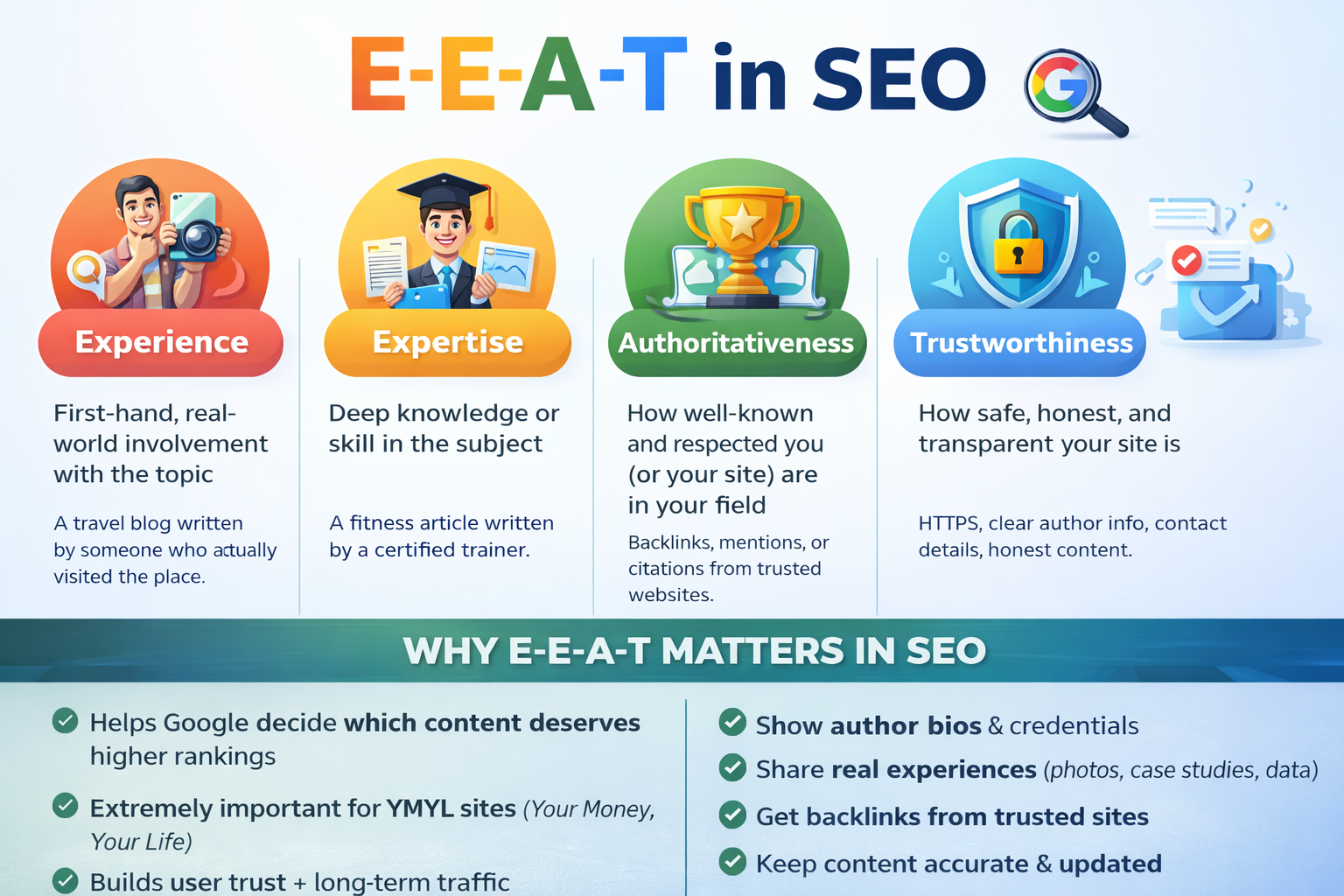
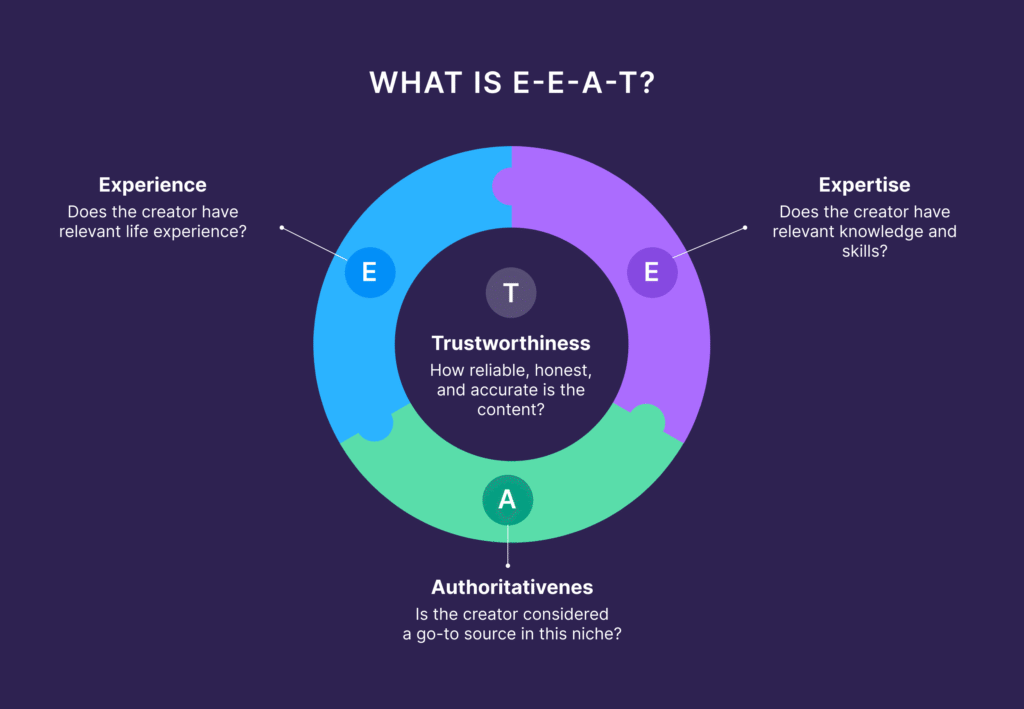
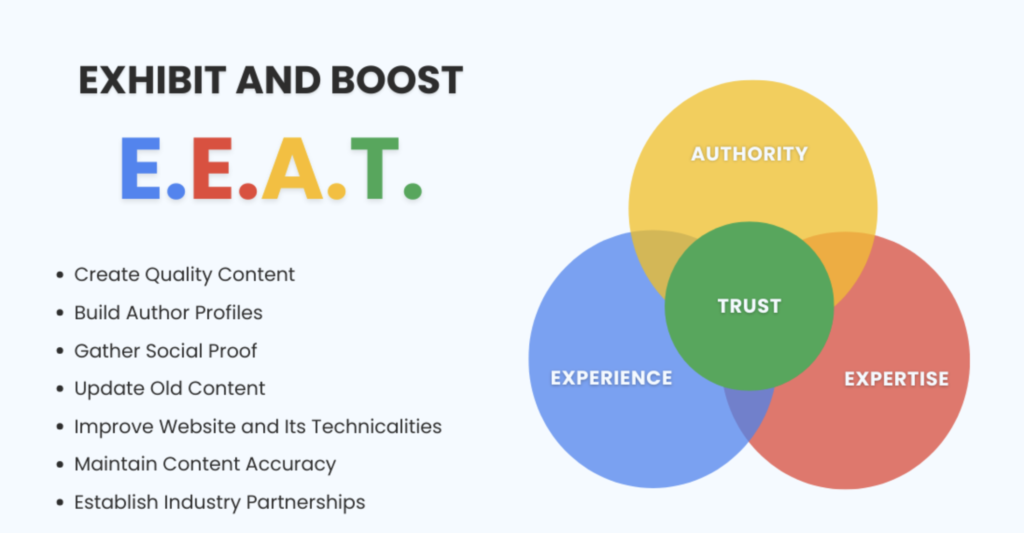
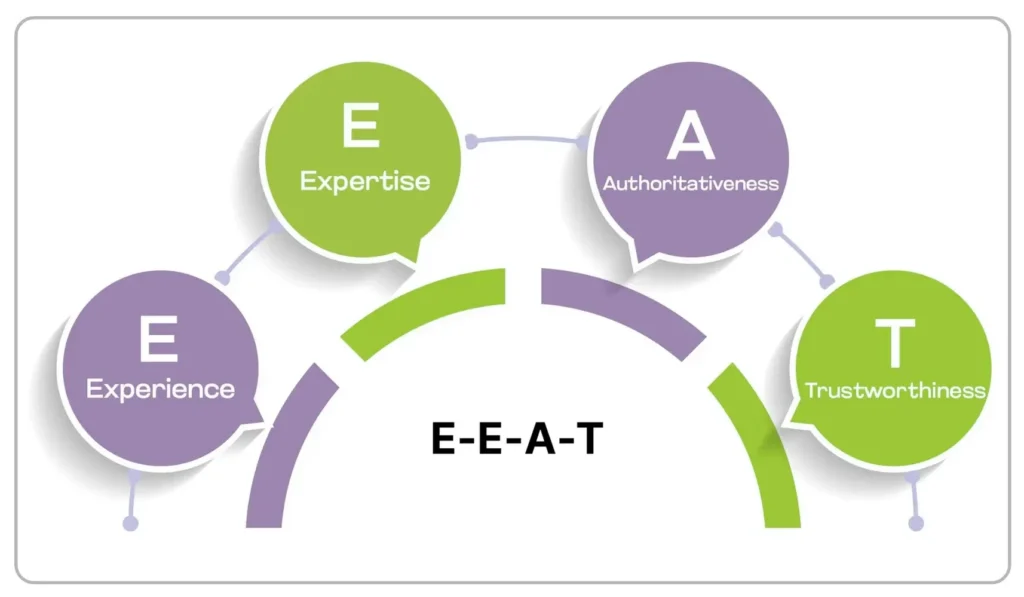
EEAT is Google’s framework from the Search Quality Rater Guidelines to evaluate content quality:
Experience — First-hand, real-life involvement with the topic. Has the creator actually done what they’re writing about? (e.g., used the product, lived the experience, tested the method)
Expertise — Deep knowledge, skills, and qualifications in the subject. Does the author demonstrate strong understanding, backed by credentials or in-depth insight?
Authoritativeness — Recognition as a leading or reliable source in the niche. Is your site (or author) cited, linked to, or respected by others in the industry?
Trustworthiness — Overall reliability, accuracy, honesty, and safety of the site/content. Is the information factual? Is the site secure (HTTPS)? Transparent about who runs it? No misleading claims?
Why EEAT Matters So Much in 2026
Recent core updates (including December 2025) raised the quality bar site-wide — EEAT now applies far beyond health/finance to e-commerce, reviews, SaaS, how-tos, and more.
AI-generated content floods the web → Google favors human-first, experience-backed content.
AI Overviews, generative search, and zero-click results pull from high-EEAT sources only.
Trust is the foundation — the other elements build toward it, and poor trust kills rankings fast.
Practical Ways to Strengthen EEAT in 2026
1. Showcase Experience (The Biggest 2026 Differentiator)
Include personal stories: “I tested this tool for 6 months and earned X results…”
Add original proof: Screenshots, before/after photos, data logs, video demos.
Use first-person language and real-world examples.
For reviews/products: Show timestamps, receipts, or usage proof.
2. Demonstrate Expertise
Strong author bios: Real name, photo, credentials, years of experience, LinkedIn/social proof.
Write in-depth: Explain “why” and “how”, cover edge cases, common mistakes.
Cite reputable sources and link to studies/data (with proper attribution).
Avoid shallow listicles — go deep with analysis.
3. Build Authoritativeness
Earn backlinks from respected sites (guest posts, interviews, HARO).
Get mentions in industry publications, Reddit, forums, or news.
Partner with influencers or brands in your niche.
Long-term: Aim for brand recognition (e.g., Wikipedia-level mentions eventually).
4. Maximize Trustworthiness
Use HTTPS everywhere.
Clear About Us, Contact, Privacy Policy, and Terms pages.
Display real testimonials, reviews, or case studies.
Be transparent: Disclose affiliates, update old content, correct errors quickly.
Add detailed author bios with photos and credentials to every article?
Include first-hand experience proof (screenshots, personal results, timestamps)?
Cite sources and use original images/data instead of stock/generic content?
Update About Us + Contact pages with full transparency?
Ensure HTTPS, privacy policy, and secure forms are in place?
Refresh old content for accuracy and add recent experience/examples?
Monitor backlinks and brand mentions (use tools like Ahrefs or Google Alerts)?
For YMYL or competitive niches — double-check everything twice?
Final Thought for 2026
Ranking in 2026 isn’t about writing more — it’s about being more trustworthy. Google wants content that real people would recommend, not just what ranks.
Author : AKASH DAYAL GROUPSPublished on : October 11, 2025