People Also Search For (PASF)

People Also Search For (PASF) – How It Works on Google Search

In the ever-evolving world of search engine optimization (SEO), staying ahead means mastering Google’s subtle yet powerful SERP features. One such underrated gem is the People Also Search For box. If you’ve ever noticed a carousel or list of related searches popping up after clicking a result and returning to Google, that’s PASF in action.

As we move into 2026, with Google’s algorithms increasingly focusing on user intent, entity relationships, and topical depth, PASF has become a critical tool for SEOs. It reveals hidden keyword opportunities, helps build topical authority, and signals how Google understands query relationships. This in-depth guide covers everything you need to know about People Also Search For, from its mechanics to advanced SEO tactics.

Google search results for SEO queries

What Exactly Is People Also Search For?

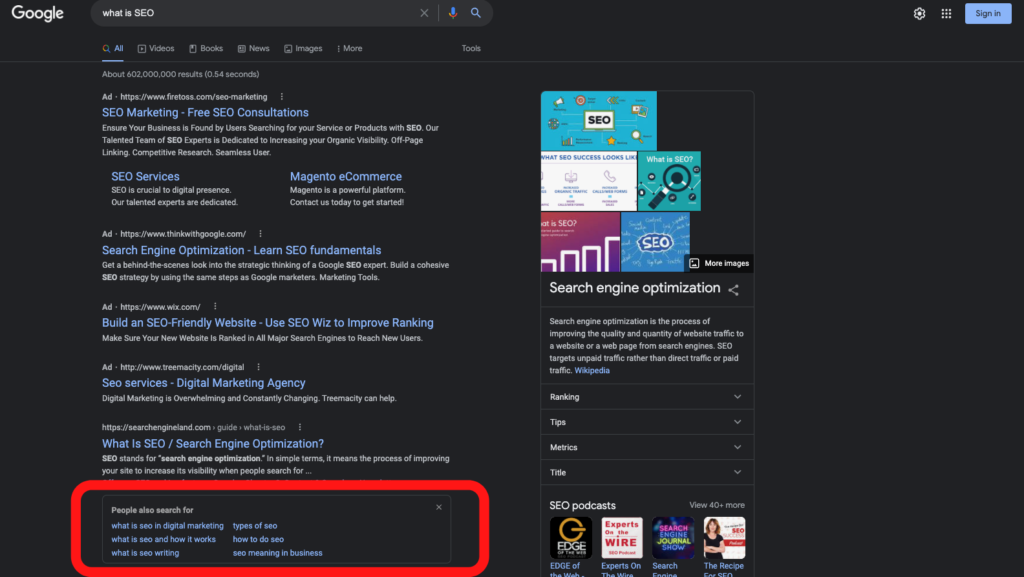
The PASF feature is a Google SERP element that displays a list of related search terms or entities. Typically showing 6-8 suggestions in a boxed carousel, PASF appears in two main scenarios:

  1. After clicking a result and hitting the back button: Google infers that the initial result didn’t fully satisfy the user, so it offers alternative searches.
  2. Within knowledge panels or entity-based results: For searches about people, brands, products, or topics, PASF suggests closely related entities.

Unlike static related searches at the bottom of the page, PASF is dynamic and context-aware. It’s powered by Google’s understanding of search patterns – analyzing billions of queries to identify what users commonly search next.

People Also Search For (PASF) - How It Works on Google Search

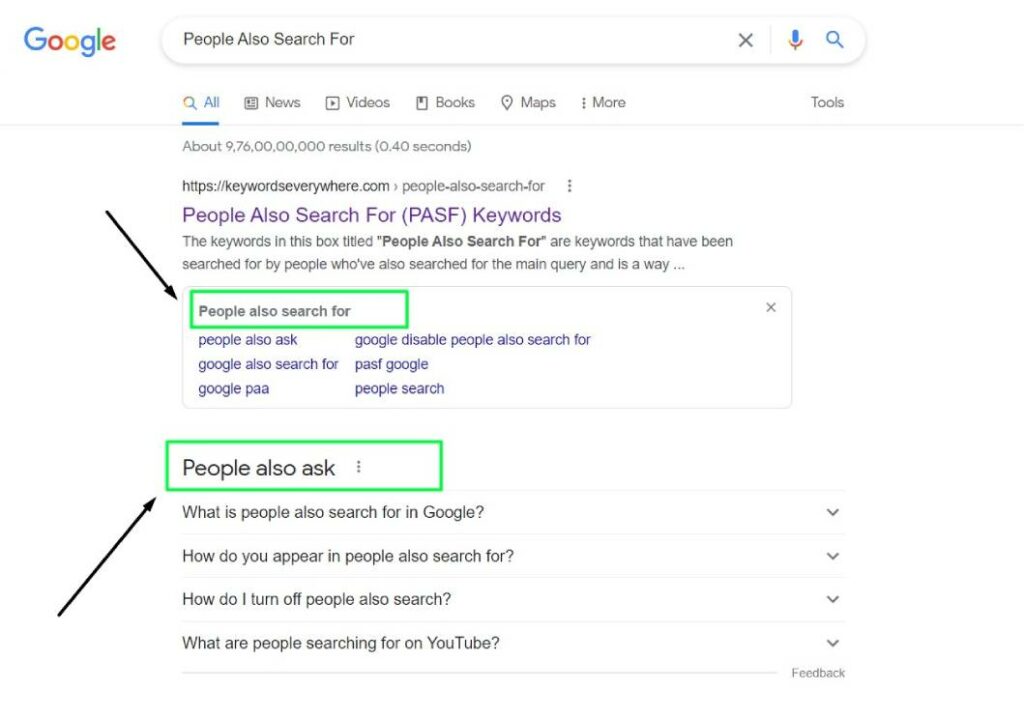
PASF vs. People Also Ask: Key Differences

A common mix-up is between People Also Search For (PASF) and People Also Ask (PAA). While both enhance user experience, they serve distinct purposes:

  • People Also Ask (PAA): Focuses on questions. It shows expandable boxes with related queries in question form (e.g., “How does PASF work?”). PAA is great for informational intent and often triggers featured snippets.
  • People Also Search For (PASF): Focuses on related topics, entities, or refinements. Suggestions are usually noun phrases or direct keywords (e.g., “acai berry benefits” or competitor brands). PASF targets navigational or comparative intent.
FeaturePeople Also Ask (PAA)PASF
FormatExpandable question boxesCarousel or list of related terms/entities
Primary IntentInformational (questions)Refinement, comparison, entity-related
TriggerBroad queriesPost-click back navigation or entities
SEO OpportunityFeatured snippets, FAQ schemaKeyword clustering, topical maps
Appearance FrequencyHigh on informational searchesHigh on entity or unsatisfied searches
Search results for white coffee

Understanding this distinction is crucial for SEO strategy. Targeting PAA optimizes for voice search and zero-click answers, while PASF helps with broader topical coverage.

How Does People Also Search For Work Behind the Scenes?

Google’s PASF is driven by:

  • User Behavior Data: When users frequently return to results after visiting a page, Google assumes dissatisfaction and suggests alternatives.
  • Entity Recognition: Powered by the Knowledge Graph, PASF excels at entity-based searches (e.g., searching “Elon Musk” shows PASF for related figures like “Jeff Bezos”).
  • Query Refinements: It clusters similar intents, revealing subtopics or long-tail variations.

In 2026, with advancements in AI like Gemini integrations, PASF is becoming more semantic – understanding context beyond exact matches.

People Also Search For (PASF) - How It Works on Google Search

Why People Also Search For Matters for SEO in 2026

PASF isn’t just a user aid – it’s an SEO goldmine:

  1. Keyword Gap Analysis: Reveals terms competitors rank for that you might miss.
  2. Topical Authority Building: Helps create content clusters around core topics.
  3. User Intent Insights: Shows what users want next, reducing bounce rates.
  4. Entity Optimization: Signals to Google your site’s relevance in a niche.
  5. Traffic Potential: Ranking in PASF can drive secondary traffic from related queries.

Studies from SEO tools show sites optimizing for People Also Search For clusters see 15-30% lifts in organic traffic over time.

Step-by-Step: Using People Also Search For for Keyword Research

Here’s how to harness PASF effectively:

  1. Manual Extraction: Search your target keyword, click top results, hit back, and note PASF suggestions.
  2. Chain Research: Click PASF terms and repeat to build a topic map.
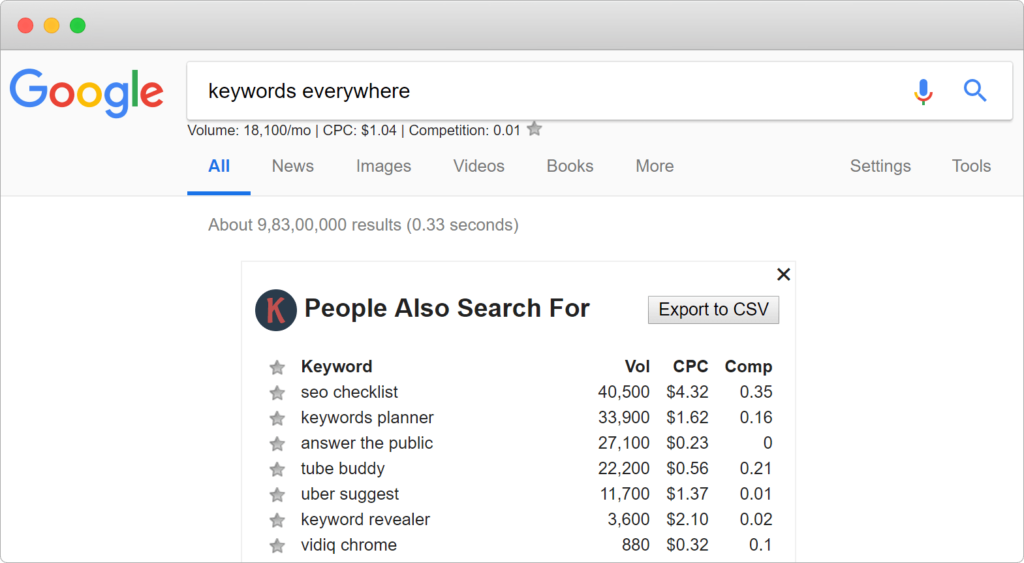
  3. Tools Integration: Use extensions like Keywords Everywhere or free scrapers for bulk data.
  1. Cluster Keywords: Group PASF terms into pillars and subtopics.
  2. Prioritize Low-Competition Gems: Look for high-relevance, lower-volume terms.
People Also Search For (PASF) - How It Works on Google Search

Example : Searching “acai berries” might show PASF like “acai benefits,” “frozen acai,” leading to content ideas.

Search results for acai berries benefits

Advanced Strategies to Leverage PASF for Rankings

To go beyond basics:

  • Create Hub-and-Spoke Content: Build pillar pages covering core topics, linked to spoke articles on PASF terms.
  • Internal Linking Mastery: Link between related content to signal topical depth.
  • Schema Markup: Use About/Bio for entities to boost PASF appearances.
  • Competitor PASF Hijacking: Target PASF terms from competitor profiles.
  • Monitor Changes: PASF evolves; track with tools for algorithm updates.

Tools for PASF Research in 2026

  • Free: Google SERPs manual checks, AlsoAsked (for related, though more PAA).
  • Paid: Ahrefs/Semrush (SERP analysis), Nightwatch PASF tracker.
  • Extensions: Keywords Everywhere, SEO Minion.

Real-World Examples & Case Studies

Case 1: Keto Diet Health Blog

This case proves that mining PASF terms can quickly reveal high-intent long-tail keywords. By building a tight content cluster around these suggestions, the blog satisfied deeper user journeys and earned stronger topical authority. The traffic surge came from both direct rankings and increased secondary visits via related searches.

  • Targeted core keyword: “keto diet.”
  • Used PASF suggestions: “keto recipes”, “keto snacks”, “keto breakfast ideas”, “keto meal prep”
  • Created 20+ supporting cluster articles with strong internal linking.

Result: Organic traffic increased by 45% within 6 months.

Case 2: SaaS Software Website

Entity-focused People Also Search For optimization works especially well for competitive SaaS niches. By covering related brands, comparisons, and alternatives, the site appeared in far more “vs” and “alternative to” style searches. This strategy not only lifted visibility but also improved click-through rates from curiosity-driven queries.

  • Focused on entity-based PASF: competitor tool names, “best project management software”, “cloud CRM alternatives”, “free task management tools”
  • Built deeper topical clusters + optimized entity mentions and schema.

Result: 137% more keywords ranking in Google + 24% rise in impressions.

These real tactics show how using PASF to guide content clusters can deliver fast, measurable SEO growth.

Potential Drawbacks and Best Practices

PASF can highlight dissatisfaction – ensure your pages fully satisfy intent to minimize back-clicks. Avoid over-optimization; focus on user value.

Conclusion: Make PASF Your SEO Superpower

In 2026’s AI-driven search landscape, People Also Search For is more than a feature – it’s a window into Google’s mind. By integrating PASF into your workflow, you’ll uncover richer keywords, build unbreakable topical authority, and drive sustainable organic growth.


Author : AKASH DAYAL GROUPS Published on : January 5, 2026